EV Charger GuidesLocal Guides
What Is a Load Calculation and Why Does It Matter for EV Chargers
A load calculation for EV chargers tells you whether your Redondo Beach panel can safely carry a new 240V circuit - before anyone drills a hole or pulls a permit.
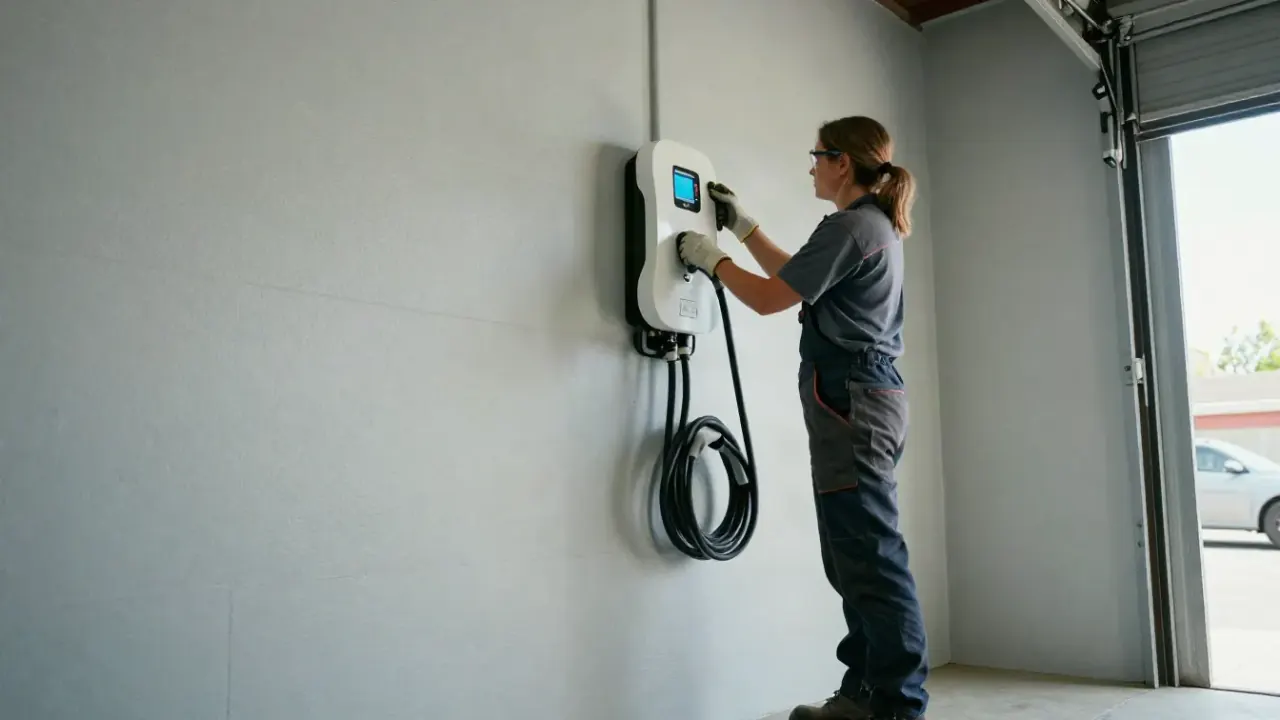
A load calculation for EV chargers is a math-and-code exercise that adds up every electrical load in your home and confirms whether your existing panel can carry a new 240-volt charging circuit without overloading it. If the total calculated demand stays under your panel's capacity, you can install a Level 2 charger. If it doesn't, you need a panel upgrade, a subpanel, or a load-management device before the first foot of conduit goes up.
We run these calculations almost every week for homeowners across Redondo Beach, and the answer is rarely the same twice. Two houses on the same block in North Redondo can have completely different outcomes. Here's what the calculation actually involves, why it matters so much in this city's older housing stock, and what the numbers look like in practice.
What Is a Load Calculation for EV Chargers?
An electrical load calculation is a standardized method - defined in Article 220 of the National Electrical Code - for estimating the maximum demand your home's electrical system will place on the utility service at any one time. It's not a guess and it's not a simple sum of every breaker in the panel. The code applies demand factors that account for the reality that you never run the oven, the dryer, the AC, and the microwave at full tilt simultaneously.
The calculation starts with the square footage of your home, adds specific allowances for small-appliance and laundry circuits, then adds the nameplate ratings of your large fixed appliances: range, water heater, dryer, HVAC, EV charger, pool pump, and anything else hardwired. The result is a demand figure in amps or volt-amps that gets compared against your service size - typically 100 amps in older Redondo Beach homes, 200 amps in most post-1980 construction.
For EV charging specifically, the calculation has one extra wrinkle. A Level 2 charger draws a continuous load, which the code treats more conservatively than an intermittent one. A 40-amp charger running for six hours straight is not the same as a 40-amp oven running for 45 minutes. That's why the EV load gets multiplied by 125% before it's added to the total.
If you want the full technical breakdown of how we evaluate a panel, our page on electrical load calculation for EV charger Redondo Beach CA walks through the process step by step.
Why a Load Calculation Matters More in Redondo Beach Than Most Drivers Realize
Redondo Beach has a housing mix that makes load calculations unusually important. A large share of the city's single-family homes were built between 1945 and 1975, and many still run on 100-amp service with a 1950s or 1960s panel. Those panels were sized for a world with one refrigerator, one TV, and no air conditioning. Add a 40-amp EV charger on top of a modern household's actual usage and you're asking a 60-year-old service to do something it was never designed for.
The problem shows up in specific neighborhoods. In The Avenues EV Charger Installation territory, we regularly find original 100-amp panels in 1,400-square-foot homes where the owner has already added central AC, a tankless water heater, and a hot tub. The EV charger is the load that finally tips it over. Same story in parts of South Redondo EV Charger Installation where postwar tract homes have been renovated but the service was never upgraded.
There's also a permitting angle. The City of Redondo Beach requires an electrical permit for any new 240-volt circuit, and the plan check includes a load calculation worksheet. If your contractor skips it and the inspector asks for it, the job stalls. We handle that paperwork as part of our EV charger permit help Redondo Beach service, and we've never had a load calculation rejected when it was done correctly the first time.
How to Do a Load Calculation for an EV Charger Near Me in Redondo Beach
Here's the actual sequence a licensed electrician follows. If you're trying to understand what your contractor is doing - or you're a handy homeowner trying to figure out whether you even need to call one - this is the process.
- Measure the home's square footage. General lighting load is calculated at 3 volt-amps per square foot for a dwelling unit. A 1,500-square-foot home gets 4,500 VA before anything else is added.
- Add small-appliance and laundry circuits. The code requires 1,500 VA for each of two small-appliance circuits and 1,500 VA for the laundry circuit - 4,500 VA total in most homes.
- Add fixed appliances. Range, water heater, dryer, dishwasher, disposal, microwave, HVAC, pool equipment - each nameplate rating goes into the tally.
- Apply demand factors. The first 10,000 VA of the general load counts at 100%; anything above that counts at 40%. The range and dryer get their own demand factors from NEC Table 220.55 and 220.54.
- Add the EV charger at 125% of its rated amperage. A 40-amp charger adds 50 amps to the calculated load. A 48-amp charger adds 60 amps.
- Compare against the service size. If the total calculated load exceeds the service rating, you need a panel upgrade or a workaround.
The math itself takes about 20 minutes. The hard part is reading the existing panel correctly - identifying what's actually on each circuit, spotting double-tapped breakers, and recognizing when a panel's bus rating doesn't match the main breaker. That's the part that requires someone who's done it a few hundred times.
If you're searching for a panel capacity check Redondo Beach homeowners trust, we'll come out, pull the cover, and give you a straight answer on what your panel can handle.
What the Numbers Actually Look Like in a Redondo Beach Home
Concrete example: a 1,600-square-foot Redondo Beach home built in 1962 with a 100-amp service, central AC, a gas range, a gas water heater, and a gas dryer. The calculated load comes out around 78 amps. Add a 40-amp Level 2 charger at 125% (50 amps) and you're at 128 amps - over the 100-amp service. That home needs a panel upgrade or a load-management solution.
Now change one variable. Swap the central AC for a mini-split system and the numbers shift. Or install a smart splitter that pauses the charger when the dryer kicks on, and the calculated load drops below the threshold. Same house, same charger, different answer.
Typical 2026 pricing in this area for the assessment itself runs $150 to $350 if you hire it as a standalone service, and it's usually bundled into the installation quote. A 200-amp panel upgrade runs $2,200 to $4,500 depending on whether the meter main needs replacement and how much drywall work is involved. A subpanel for the garage - which is often the cheaper path - runs $1,100 to $2,400. We quote all of it upfront before we start.
What Happens When You Skip the Load Calculation
Skipping the calculation doesn't cause a problem on day one. It causes a problem on the hottest afternoon in September when the AC, the oven, the dryer, and the EV charger all run at once and the main breaker trips. Or worse, it causes a problem that doesn't trip anything - a panel that runs hot, breakers that degrade, and a service that quietly operates beyond its rating for years.
We've opened panels in Redondo Beach where the insulation on the service conductors was visibly heat-damaged. The homeowner had no idea. They just knew the lights dimmed when the dryer started.
There's also the inspection problem. Redondo Beach plan check will ask for the calculation. If your installer didn't do one, the permit gets red-tagged, the work stops, and you pay someone else to finish what should have been done correctly the first time.
Common Mistakes We See on EV Charger Load Assessments
Most bad load calculations fail for one of five reasons. Watch for these whether you're doing the math yourself or reviewing a contractor's work.
- Forgetting the 125% continuous-load multiplier. EV chargers are continuous loads under the NEC. A 40-amp charger is 50 amps of calculated load, not 40.
- Using the breaker size instead of the nameplate rating. A 50-amp breaker on a 40-amp charger doesn't mean the load is 50 amps - but it also doesn't mean you can ignore the 125% rule.
- Missing the pool pump or spa. In Redondo Beach, a surprising number of homes have pool equipment that the owner forgets to mention. That's often 15 to 25 amps of continuous load right there.
- Assuming a 200-amp panel means 200 amps available. A 200-amp service with a 200-amp calculated load has zero headroom. The number on the main breaker is a maximum, not a budget.
- Ignoring the bus rating. Some panels have a 200-amp main breaker on a 125-amp bus. That's a real configuration, and it changes the answer completely.
We see the first and fourth mistakes most often. Both are the kind of thing that looks fine on paper until an inspector or a hot day finds it.
When to Call a Professional
Call a licensed electrician if your panel is older than 30 years, if you've never had the cover off, if you're not sure what size your service is, or if you're planning to install a charger above 32 amps. Those are the situations where a wrong answer is expensive.
We do this work every day in Redondo Beach. Our technicians pull the panel cover, read the actual nameplate ratings, run the calculation to NEC Article 220, and tell you exactly what your home can support - before you buy a charger or sign an installation contract. If the answer is that you need a panel upgrade or a subpanel, we'll show you the numbers and quote both paths.
If you're also considering a Tesla-specific setup, we handle Tesla Wall Connector Installation Redondo Beach CA and run the same load calculation first. The charger brand doesn't change the math.
Frequently Asked Questions
What is a load calculation for an EV charger in Redondo Beach?
It's a NEC Article 220 calculation that totals your home's electrical demand, adds the EV charger at 125% of its rating, and compares the result to your service size. In Redondo Beach, most 100-amp homes need an upgrade or load management to support a 40-amp charger.
Why do I need a load calculation for EV charger installation in Redondo Beach CA?
The City of Redondo Beach requires it for the electrical permit, and it's the only way to know whether your panel can safely carry the new circuit. Skipping it risks tripped breakers, overheated wiring, and a red-tagged inspection that stops the job.
Who performs load calculations for EV chargers near me in Redondo Beach?
A licensed electrician performs them. We run the calculation on-site in about 20 minutes, usually bundled into the installation quote. Standalone assessments run $150 to $350 in 2026. Call (310) 294-5464 to schedule one.
Can I install a Level 2 charger on a 100-amp panel?
Sometimes. If your calculated load leaves enough headroom, a 32-amp or 40-amp charger can work on a 100-amp service. If it doesn't, a subpanel, a panel upgrade, or a smart load-management device gets you there without replacing the service.
How long does a load calculation take?
The math takes about 20 minutes. The on-site visit to read the panel, identify existing loads, and check the bus rating takes 45 to 60 minutes. You'll have a written answer the same day.
Get Help with EV Charger Installation in Redondo Beach
If you're ready to find out what your panel can actually handle, we'll run the calculation, show you the numbers, and quote the installation - no guesswork, no surprises. We handle everything from the load assessment to the permit to the final inspection.
Call Redondo Beach EV Charger Installation at (310) 294-5464 to schedule your load assessment and get a straight answer on your home's capacity.