Safety GuidesLocal Guides
Safety Tips for Charging an Electric Vehicle at Home
Charging an EV at home is safe when the circuit, outlet, and charger are matched correctly. Here are the safety tips we give Redondo Beach homeowners.
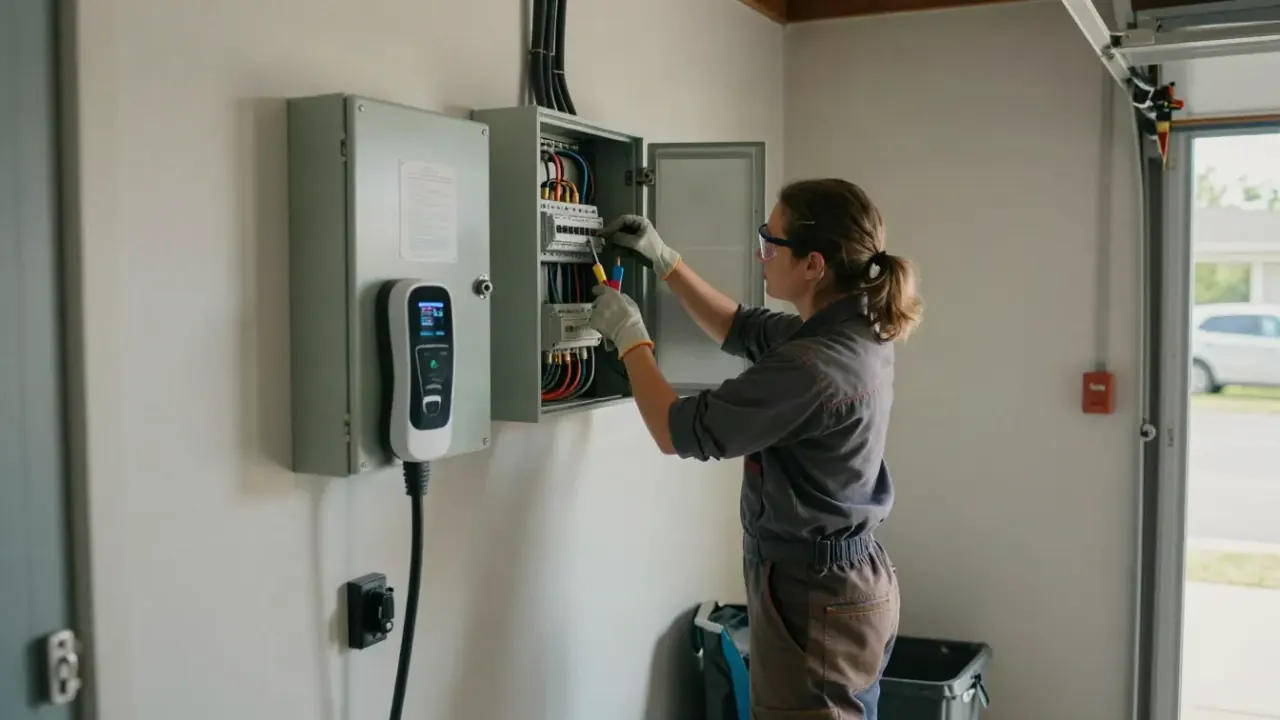
Charging an electric vehicle at home is safe when the charger, outlet, and circuit are matched to each other and installed to code. The fires and melted plugs you read about almost always trace back to a 120V outlet pushed past its limit, a worn receptacle, or a charger drawing more than the breaker allows. Safety tips for charging an electric vehicle at home come down to four habits: use the right circuit, inspect the hardware, do not daisy-chain adapters, and let a licensed electrician size the load before you plug in. This guide covers what we check on every job in Redondo Beach and what you can check yourself in five minutes.
Why Home EV Charging Is Safe When the Circuit Is Right
Home EV charging safety in Redondo Beach CA starts with the circuit, not the car. A modern EV onboard charger will pull whatever amperage the pilot signal tells it is available, so the wiring has to be the thing that sets the ceiling. When the circuit is sized correctly, the breaker trips before the wire overheats. When it is not, the wire becomes the fuse.
Here is the definition worth remembering: safety tips for charging an electric vehicle at home is a set of electrical and behavioral practices that keep the charging current inside the ratings of the outlet, wiring, and breaker that feed it. Everything below is a variation on that idea.
The three failure points we see most often:
- A NEMA 5-15 or 5-20 household outlet used for Level 1 charging on a circuit that also feeds a garage freezer or bathroom GFCI.
- A NEMA 14-50 receptacle wired with 8-gauge copper on a 50-amp breaker but fed by a 40-amp branch circuit.
- A hardwired Level 2 charger set to 48 amps on a circuit that can only carry 40.
Each of those is a code violation under the current California Electrical Code, and each one is fixable in an afternoon. If your setup was installed before you bought the car, it is worth having it looked at. Our team handles Level 2 Home Charger Installation Redondo Beach CA with a load calculation first, so the charger never asks for more than the panel can give.
Match the Charger to the Circuit, Not the Other Way Around
The single most common safety mistake is buying a 48-amp charger for a house wired for 32 amps. The charger does not know your wire gauge. It only knows what the installer tells it during commissioning, and if that setting is wrong, the breaker is your only protection.
Run the numbers before you buy:
- Level 1 (120V): 1.4 kW, adds roughly 3-5 miles of range per hour. Fine for a plug-in hybrid, tight for a full EV.
- Level 2 on a 40-amp circuit (32-amp charger): 7.7 kW, adds 20-25 miles per hour. This is the sweet spot for most Redondo Beach homes with a 100-amp panel.
- Level 2 on a 60-amp circuit (48-amp charger): 11.5 kW, adds 30-40 miles per hour. Needs a 200-amp service or a load management device.
NEC 625.42 requires the charger's maximum output to be no more than 80% of the branch circuit rating. That is why a 50-amp circuit charges at 40 amps, not 50. If your electrician sets the charger to 48 amps on a 50-amp circuit, that is a violation and a heat problem waiting to happen.
We see this a lot in older homes across North Redondo EV Charger Installation, where 1950s-era 100-amp panels are common and the garage shares a circuit with the laundry. A Panel Capacity and Load Assessment Redondo Beach CA tells you in about 30 minutes whether you can add a 40-amp charger, need a subpanel, or need a service upgrade.
Inspect the Outlet, Plug, and Cable Every Few Weeks
Home EV charging safety tips Redondo Beach homeowners actually use are the boring ones: look at the plug, feel the outlet, and check the cable. A healthy charging session leaves the plug warm at most. If it is hot to the touch, stop charging and call someone.
What to look for:
- Discoloration or browning around the receptacle slots - sign of arcing or a loose connection.
- A plug that wiggles in the outlet. A NEMA 14-50 should seat firmly with no play.
- A burning smell near the outlet or panel. Kill the breaker and do not use it until an electrician inspects it.
- Cable jacket damage - cracks, exposed conductors, or a crushed section under the garage door.
- Tripping breakers more than once a month. That is the circuit telling you something is wrong.
Do this check every 4-6 weeks, and always after a heat wave. Redondo Beach garage temperatures can hit 100°F in September and October, and heat accelerates the oxidation that causes resistance at the plug.
Is It Safe to Charge an EV Overnight in Redondo Beach?
Yes - overnight charging is the safest and cheapest way to charge, provided the circuit is dedicated and the charger is set to the correct amperage. Off-peak rates from Southern California Edison start at 9 p.m. on many plans, and the cooler ambient temperature reduces stress on the wiring.
Three conditions make overnight charging safe:
- The charger is on a dedicated circuit with nothing else on it.
- The breaker is the correct size for the wire and the charger's output setting.
- The charger has a ground-fault circuit interrupter built in (all UL-listed Level 2 units do) and is installed on a GFCI-protected circuit if it is a plug-in model.
What you should not do is run an extension cord from the laundry room to the driveway overnight. Extension cords are not rated for continuous 12-amp loads, and the connectors overheat. If you need a temporary solution, use a heavy-gauge cord rated for the amperage, keep it under 25 feet, and never run it under a door or across a walkway.
Heat, Salt Air, and Garage Conditions in Redondo Beach
Redondo Beach adds two local factors to the national safety playbook: salt air and summer heat. Both affect how long your charging hardware lasts.
Salt air corrodes the brass contacts inside outdoor receptacles and the pins on your charging plug. If your charger lives outside or in a carport, inspect the plug for green or white corrosion every couple of months and clean it with a dry cloth - never with water or contact cleaner. An outdoor-rated NEMA 14-50 receptacle with a weatherproof cover is the right choice; a standard indoor receptacle in a carport will fail within a few years.
Heat is the other factor. Charging at 40 amps generates real heat at the plug and inside the panel. In a garage that hits 100°F, that heat has nowhere to go. Keep the area around the charger clear, do not stack boxes against the panel, and if your garage has no ventilation, crack the door while charging in July and August.
Homes in South Redondo EV Charger Installation tend to have detached garages and longer conduit runs, which means voltage drop becomes a real concern. We size conductors for a maximum 3% voltage drop on the branch circuit, per NEC 210.19(A) informational note. Undersized wire on a long run is a slow heat problem, not an immediate one, and it is easy to miss.
Common Mistakes We See on Home EV Charging Setups
These are the mistakes we correct most often when we open a panel in Redondo Beach. None of them are exotic. All of them are preventable.
- Using a 14-30 dryer outlet with an adapter. The adapter lets a 40-amp charger plug into a 30-amp circuit. The breaker will trip, or worse, it will not.
- Leaving the charger on the highest amperage setting. Many chargers ship at 48 amps. If your circuit is 40, that setting is wrong.
- Back-feeding through a generator inlet. We have seen homeowners try to charge from a portable generator inlet. That is not what it is for.
- Ignoring a warm panel cover. A panel that is warm to the touch under load is a loose lug or an overloaded bus. Both need attention.
- Skipping the permit. Unpermitted work is a safety issue and a disclosure issue when you sell. Our Permit and Utility Rebate Help Redondo Beach CA service handles the city paperwork and the SCE rebate application in one pass.
If you are not sure whether your setup has one of these problems, a 30-minute inspection will tell you. We would rather find a loose lug on a Tuesday than hear about a garage fire on a Saturday.
When to Call a Professional
Call a licensed electrician if your breaker trips more than once a month, if the plug or outlet is hot to the touch, if you smell burning near the panel, or if you are installing a new charger and have not had a load calculation done. Those four situations are not DIY territory.
We also get calls from homeowners who simply want the charger set up correctly the first time - hardwired, torqued to spec, labeled at the panel, and permitted. Redondo Beach EV Charger Installation handles the whole job: load assessment, permit, installation, and a walkthrough of the settings so you know what amperage your charger is actually running. If you are in a condo or HOA building, we also handle the approval paperwork.
Frequently Asked Questions
Is it safe to charge an EV at home in Redondo Beach?
Yes, when the charger is on a dedicated circuit sized to code. A 40-amp circuit with a 32-amp charger is safe for most Redondo Beach homes. The risk comes from shared circuits, worn outlets, and chargers set higher than the wiring allows.
What are the safety tips for home EV charging in Redondo Beach CA?
Use a dedicated circuit, keep the charger at or below 80% of the breaker rating, inspect the plug and outlet every 4-6 weeks, avoid extension cords, and never use an adapter to plug a 40-amp charger into a 30-amp outlet. Have a licensed electrician verify the panel load before installation.
Can I charge my EV overnight safely in Redondo Beach?
Yes. Overnight charging on a dedicated Level 2 circuit is the safest and cheapest option, especially after 9 p.m. when SCE off-peak rates apply. Just confirm the charger's amperage setting matches the circuit and that nothing else shares the breaker.
How often should I inspect my home EV charging setup?
Check the plug and outlet every 4-6 weeks, and again after any heat wave above 95°F. Have a licensed electrician torque the breaker lugs and inspect the receptacle every 2-3 years, or any time you notice warmth, discoloration, or a tripping breaker.
Do I need a permit to install a home EV charger in Redondo Beach?
Yes. The City of Redondo Beach requires an electrical permit for a new 240V circuit or a hardwired charger. The permit covers the load calculation, the wiring method, and the final inspection. We pull the permit and handle the inspection as part of the install.
Get Help with EV Charger Installation in Redondo Beach
If your charger was installed before you owned the car, or you are adding one for the first time, we can check the circuit, size the load, and set the charger to the right amperage. Call Redondo Beach EV Charger Installation at (310) 294-5464 and we will get you on the schedule.