Repair TipsLocal Guides
Common Reasons an EV Charger Stops Working
An EV charger that quits is usually telling you one of a handful of things. Here are the most common reasons chargers stop working in Redondo Beach and how to fix them.
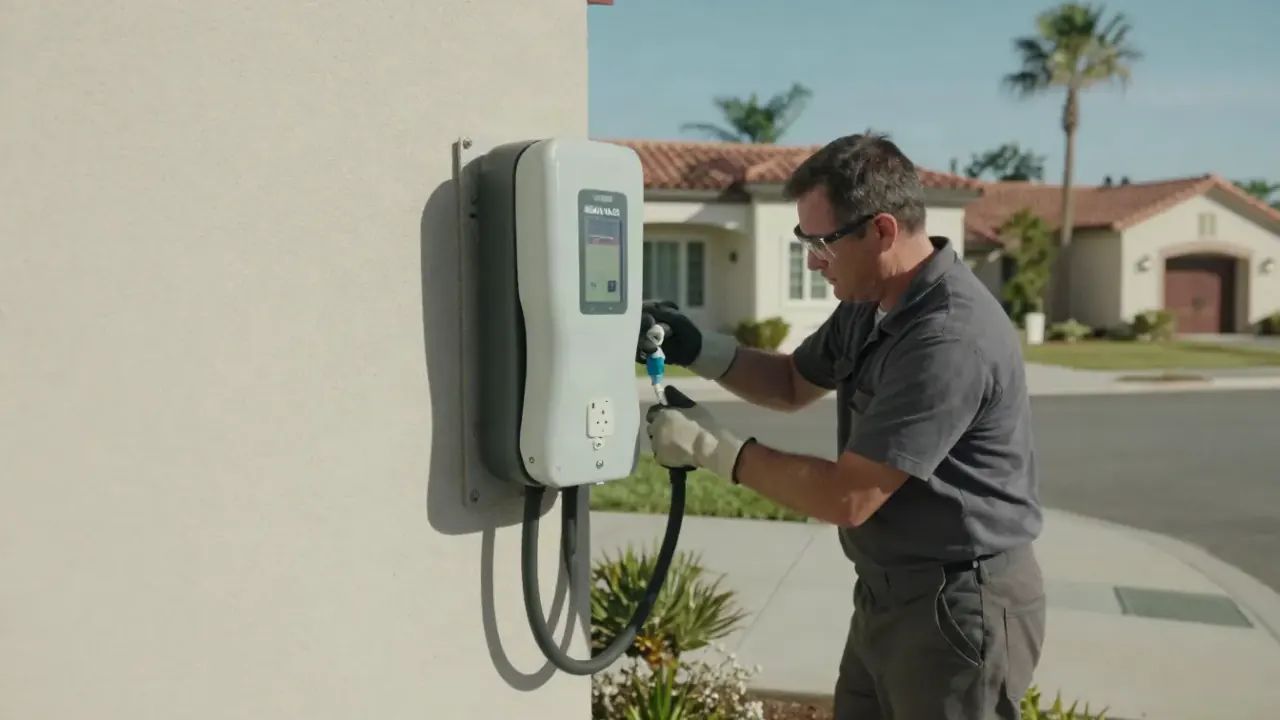
An EV charger stops working for one of a handful of reasons: a tripped breaker or GFCI, a loose connection at the outlet or terminal, a ground fault, an internal charger fault, a vehicle-side handshake failure, or a power-quality problem on the circuit. In Redondo Beach, the most common culprits we see are tripped 240V breakers during summer heat and ground-fault errors caused by coastal moisture. The good news is that most of these are diagnosable in under an hour, and many are fixable the same day.
We install and repair chargers across the South Bay, and we have seen every failure mode a Level 2 unit can throw at you. This post walks through what actually goes wrong, how to read the symptoms, and when it is time to stop resetting the breaker and call someone.
Why Is My EV Charger Not Working in Redondo Beach?
An EV charger not working in Redondo Beach CA usually comes down to one of three systems: the power supply feeding it, the charger hardware itself, or the vehicle. Isolating which of those three is failing takes about ten minutes with a multimeter and a look at the charger's indicator lights.
Common reasons an EV charger stops working is really a list of failure points, and every one of them sits in one of those three buckets. Power supply problems include tripped breakers, undersized circuits, and voltage sag. Hardware problems include failed internal contactors, cracked J1772 handles, and burnt terminal screws. Vehicle problems include onboard charger faults, scheduled charging conflicts, and software handshake bugs.
If your charger is a hardwired Level 2 unit and it worked fine for months before quitting, the odds shift heavily toward power supply or hardware. If it never worked reliably from day one, the install itself is suspect.
Power Supply and Breaker Problems
A tripped breaker is the single most common reason a home EV charger stops working, and it is also the easiest to misdiagnose. A 40-amp Level 2 charger pulls a continuous 32 amps for hours. That load is far heavier than anything else in a typical Redondo Beach home, so any weakness in the circuit shows up fast.
Here is what we check first on a no-power call:
- Breaker position. A breaker that is tripped sits in the middle, not fully off. Reset it once. If it trips again within minutes, stop and call us.
- Breaker size. A 32-amp charger needs a 40-amp breaker minimum; a 40-amp charger needs a 50-amp breaker. Undersized breakers nuisance-trip constantly.
- Voltage at the charger. We want 240V ±5% under load. Anything under 228V means the circuit is starving the charger.
- Loose lugs. Heat cycling loosens breaker and terminal screws over time. A loose lug creates resistance, resistance creates heat, and heat trips breakers.
Older homes in North Redondo EV Charger Installation territory often have 100-amp service panels that were never sized for a continuous 32-amp load plus an electric dryer and central AC running at the same time. When the panel is the bottleneck, a Panel Capacity and Load Assessment Redondo Beach CA tells you whether you need a service upgrade or just a smarter load-management setup.
Wiring, Outlet, and Connector Faults
Wiring and connector faults are the second most common cause of an EV charger that stops working mid-session, and they are the ones most likely to be dangerous. A plug-in charger on a NEMA 14-50 outlet is especially vulnerable because the plug connection is a wear point.
Watch for these specific failures:
- Scorched outlet face. Brown or black discoloration around the slots means the outlet has been overheating. Replace it before it fails completely.
- Loose plug fit. If the plug wiggles or pulls out with almost no resistance, the internal contacts are worn.
- Burnt terminal screws. On hardwired units, we regularly find terminal screws that have backed off a quarter turn after two or three years of thermal cycling.
- Cracked J1772 handle or damaged pins. Bent pilot pins stop the vehicle handshake and the charger throws a fault.
If your setup is a plug-in unit and the outlet is showing any of those signs, a proper NEMA 14-50 Outlet Installation Redondo Beach CA on a dedicated circuit is the durable fix. For hardwired units, we torque every terminal to spec and re-check it on the follow-up visit.
Charger Fault Codes and What They Mean
EV charger fault codes in Redondo Beach California almost always fall into four families: ground fault, over-temperature, pilot signal, and internal relay. The exact code varies by brand, but the underlying causes repeat.
Ground Fault Errors
A ground-fault error means current is leaking somewhere it should not. On the coast, the usual suspect is moisture in the J1772 handle or a corroded ground connection at the charger. We see this most often after foggy mornings and winter rain.
Over-Temperature Faults
The charger's internal temperature sensor trips when the unit exceeds roughly 158°F. Direct afternoon sun on a garage wall, a charger mounted too close to a hot water heater, or a loose terminal generating resistance all push it over that threshold.
Pilot Signal and Communication Errors
The pilot signal is how the charger and vehicle agree on how much current to send. A damaged cable, a dirty pin, or a software mismatch between charger and car firmware breaks that conversation. Unplugging, waiting 30 seconds, and replugging clears it about half the time.
Internal Relay or Contactor Failure
When the internal contactor welds shut or fails open, the charger clicks but never delivers current. This is a hardware failure and the unit needs service or replacement. Our EV Charger Repair and Troubleshooting Redondo Beach CA team diagnoses contactor failures with a load test, not guesswork.
Vehicle-Side Issues That Look Like Charger Failures
Roughly one in five "charger not working" calls turns out to be a vehicle problem, not a charger problem. Before you spend money on a repair, rule these out.
- Scheduled charging. The car is waiting for its off-peak window and the charger is doing exactly what it was told.
- Charge limit set below current state of charge. The car hits its 80% cap and stops. The charger looks dead.
- Onboard charger fault. The car's internal charger has failed. The wall unit is fine.
- Firmware mismatch. A recent over-the-air update on the car can break the handshake with an older wall unit.
The fastest test is to plug the same car into a known-good public charger. If it fails there too, the car is the problem. If it charges fine, the issue is at home.
Heat, Moisture, and Redondo Beach Conditions
Redondo Beach sits in a salt-air coastal environment with morning marine layer, and that combination is hard on outdoor charging equipment. We see three seasonal patterns repeat every year.
Late summer heat. Garages on the east side of town regularly hit 110°F in August and September. Chargers mounted on a west-facing exterior wall take direct afternoon sun and derate or shut down to protect themselves. Shade, ventilation, or a different mounting wall solves it.
Winter and spring moisture. Marine layer and rain push humidity into outdoor enclosures. Corroded pins and ground-fault trips spike from November through March. A NEMA 3R or 4 enclosure and dielectric grease on the connector pins prevent most of it.
Salt air corrosion. Homes within a mile of the water, including most of South Redondo EV Charger Installation territory, see accelerated corrosion on exposed metal. We inspect and clean connector pins annually on coastal installs.
What to Watch Out For
Most charger failures we get called to were preventable, and the warning signs were visible for weeks. Here is what to watch for.
- Warm outlet or plug. A plug that is noticeably warm to the touch after a charge session is overheating. Stop using it and get it inspected.
- Burning smell near the panel. Shut the breaker off and call us. Do not reset it.
- Repeated breaker trips. One trip is a fluke. Three trips in a month is a circuit problem.
- Charger clicking but not charging. Classic contactor failure.
- Flickering indicator lights. Usually a voltage sag or a failing internal board.
- DIY extension cords. Never charge a car through a household extension cord. It is the number one cause of melted outlets we see.
If you catch any of these early, the repair is usually a terminal re-torque, a new outlet, or a replacement connector. Ignore them and you are looking at a burnt receptacle or a dead charger.
When to Call a Professional
Call a licensed electrician when the breaker trips more than once, when you smell burning, when the outlet or plug is hot, or when the charger throws a fault code you cannot clear with a simple power cycle. Those four situations are not DIY territory.
We handle EV Charger Installation Redondo Beach CA and the repairs that follow, from a single terminal re-torque to a full circuit rebuild. Our technicians carry the meters and torque tools to diagnose a fault on the first visit, and we quote the repair before we start. If the charger is a Tesla unit and the fault is internal, we can also handle a Tesla Wall Connector Installation Redondo Beach CA as a replacement rather than chasing a failing board.
Frequently Asked Questions
Why is my EV charger not working in Redondo Beach?
The most common cause is a tripped 240V breaker or a ground-fault error, which together account for about half the calls we run. Coastal moisture, summer heat, and loose terminal screws drive most of the rest. Reset the breaker once; if it trips again, call us.
What are common EV charger problems in Redondo Beach CA?
Tripped breakers, ground-fault faults from marine-layer moisture, over-temperature shutdowns in August and September, loose terminal screws, and worn NEMA 14-50 outlets. Vehicle-side issues like scheduled charging and onboard charger faults make up roughly 20% of calls.
Who repairs EV chargers near me in Redondo Beach?
We do. Redondo Beach EV Charger Installation repairs Level 2 units, Tesla Wall Connectors, and NEMA 14-50 outlets across the South Bay. Most repairs are completed in a single visit, usually within 60 to 90 minutes of arrival.
How much does EV charger repair cost in Redondo Beach?
Typical 2026 pricing runs $150 to $350 for a diagnostic and simple repair like a terminal re-torque or outlet replacement. Replacing a failed internal contactor or board runs $250 to $600 depending on brand. We quote before we start.
Can I fix my EV charger myself?
You can safely reset the breaker once, power-cycle the charger, and check for a warm plug. Anything past that - opening the unit, replacing an outlet, or touching panel wiring - requires a licensed electrician and a permit in most cases.
Get Help with EV Charger Installation in Redondo Beach
If your charger has quit and you have already reset the breaker once, the next step is a proper diagnosis. We find the fault, fix it, and load-test the circuit before we leave.
Call Redondo Beach EV Charger Installation at (310) 294-5464 and we will get your charger back online.